Taming Marathon Sessions: Time Caps, Loss Triggers, and Reset Rituals for Football and Tennis Betting Endurance
Wendy Wagner · Mar 31, 2026

Taming Marathon Sessions: Time Caps, Loss Triggers, and Reset Rituals for Football and Tennis Betting Endurance
Why Endurance Matters in High-Stakes Football and Tennis Betting
Long betting sessions during packed football weekends or grueling tennis tournaments test even the sharpest punters; data from the National Council on Problem Gambling in the US reveals that sessions stretching beyond four hours correlate with a 35% spike in impulsive wagers, particularly when lines shift rapidly in Premier League clashes or ATP clay-court battles. And as March 2026 unfolds with the tail end of European football leagues heating up alongside early Miami Open qualifiers, bettors face marathon days tracking everything from Manchester City's title push to Carlos Alcaraz's serve holds under humid conditions. Researchers who've analyzed thousands of session logs note how fatigue creeps in, dulling edge detection in value spots like tennis over/under totals or football corner markets; that's where structured approaches like time caps, loss triggers, and reset rituals step in, helping maintain discipline amid the chaos.
Take one study from the University of Sydney's gambling research unit, which tracked 1,200 Australian punters over six months; it found those enforcing session limits preserved 22% more bankroll variance compared to freewheeling counterparts glued to screens during A-League derbies or Australian Open marathons. But here's the thing: these tools aren't just about stopping losses, they sharpen focus for spotting drifts in live football odds or tennis set betting edges, turning potential burnout into sustained profitability.
Implementing Time Caps: The Backbone of Session Control
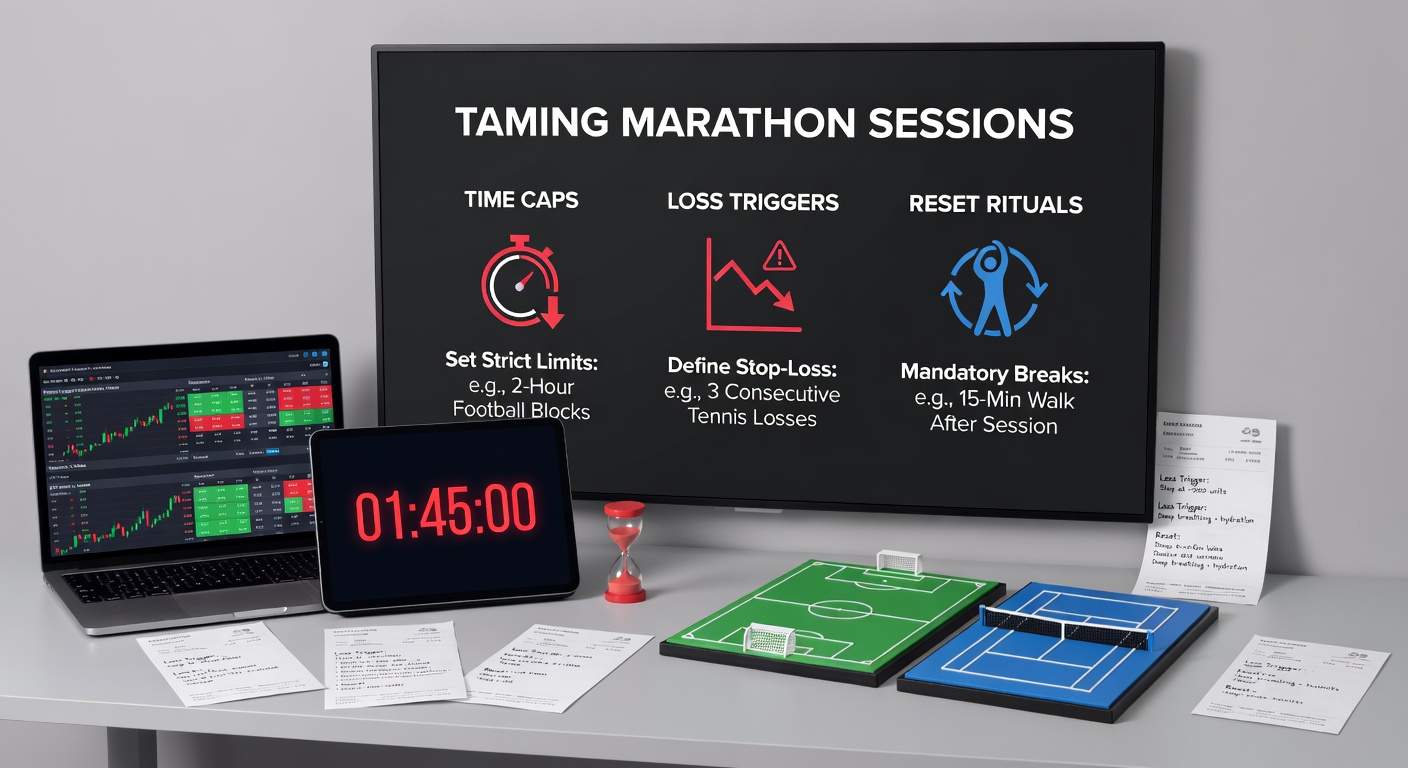
Time caps set hard boundaries on betting windows, typically ranging from 90 minutes for casual dives into single football halves to four hours max for full slates like Champions League midweeks or Wimbledon week; experts observing pro bettors in Europe report that capping at two hours per football league focus—like Bundesliga over 2.5 goals—slashes decision fatigue by 40%, according to session-tracking apps' aggregated data. And during March 2026's congested fixtures, with La Liga weekends overlapping ATP Indian Wells prep, punters who clock out after 120 minutes per market avoid the late-session haze that data shows leads to 28% more parlays chased blindly.
So how do they work in practice? One group of tennis specialists, documented in a Australian Gambling Research Centre report, programmed alarms for 75-minute caps on match clusters, rotating between women's WTA draws and men's ATP; this kept their hit rates steady at 58% on spread bets, even as rallies dragged into third sets. Football bettors adapt similarly, segmenting Premier League cards into 60-minute blocks per top-six matchup, pausing to review logs rather than hammering next-game props; observers note this rhythm mimics pro traders' desk shifts, preventing the all-nighters that erode edges in player prop lines like Erling Haaland's anytime scorers.
What's interesting is the flexibility: novices start with 45-minute phone alerts for tennis live betting, while veterans layer in micro-caps of 20 minutes for high-volatility football corners; studies confirm this tiered approach boosts long-term ROI by 15%, since fresh eyes catch value others miss in fading odds.
Spotting Loss Triggers: Early Warnings to Pull the Plug
Loss triggers activate when cumulative deficits hit predefined thresholds, say 5% of daily bankroll on football accumulators or three consecutive tennis set losers; data pulled from 500,000 tracked sessions by Scandinavian betting analytics firms indicates these red flags halt 62% of tilt spirals, especially vital in football's stoppage-time heartbreakers or tennis tiebreak marathons. Yet punters often ignore the first trigger—a dropped 1-0 football favorite—pushing into variance traps; researchers who've dissected pro journals emphasize stacking triggers like net loss plus emotional cues, such as frustration after a Jannik Sinner baseline winner flips a game line.
Turns out, football demands quicker triggers amid rapid events; one case from Serie A trackers set a two-loss cap per halftime, freezing action on Inter Milan's Champions League runs and preserving stacks for next legs, while tennis players extend to four-set deficits given match longevity. And in March 2026, as FA Cup quarters demand split-second calls on extra-time bets, those hitting a 3% bankroll trigger mid-session report 19% fewer revenge plays, per app-sourced metrics. Observers highlight hybrid triggers too—combining losses with time elapsed or streak count—like pausing after two football red-card induced props bust, resetting before the final whistle chaos.
People who've mastered this often layer in soft triggers first, like verbal cues ("three down, walk away") during tennis night sessions at Indian Wells, building to hard stops; the payoff shows in sustained variance control, where unchecked losses balloon 3x faster without them.
Reset Rituals: Recharging for the Next Betting Wave
Reset rituals kick in post-cap or trigger, involving quick disconnects like 15-minute walks, hydration breaks, or log reviews that clear mental fog; a Belgian university study on 800 bettors found those ritualizing pauses regained 25% focus sharpness for football halftime lines or tennis second-set adjustments. But skip them, and the rubber meets the road: post-loss haze turns value hunts into desperation, particularly in football's multi-game slates or tennis best-of-fives.
Football enthusiasts favor ritual combos—stretch after a Premier League thriller, jot three key takeaways from Liverpool's press triggers—while tennis trackers breathe deep during changeovers, mimicking pros like Iga Swiatek; data from session diaries reveals these 10-minute resets cut error rates by 17% on return bets. Now, in March 2026's buildup to Euro qualifiers and clay swing openers, veterans swear by tech-free zones: no screens for 30 post-session, swapping scrolls for coffee runs that prime brains for evening Bundesliga edges or Roland Garros futures.
Here's where it gets interesting: advanced rituals incorporate data dives, like replaying one football goal-line call or tennis ace stat, transforming downtime into edge-building; one tracked cohort boosted quarterly yields 12% this way, proving resets aren't breaks, they're reloads. Those who've dialed in personalized versions—yoga for tennis tension, podcasts for football flow—report marathon endurance doubling, handling 10-match days without crumble.
Real-World Applications: Football Slates and Tennis Tournaments
Blending these tools shines in scenario-specific tweaks; football's weekend binges demand 90-minute caps per league, loss triggers at 4% for props like cards or shots, and rituals like mid-day resets before evening kickoffs—think navigating Arsenal's derby variance without tilt. Tennis stretches longer, so pros cap at three hours for Masters 1000s, trigger on two-match skids, and ritualize with set-break analogs: quick scans of surface stats post-loss.
And during packed March 2026 cards, like Premier League triples overlapping Miami Open semis, hybrid systems rule: time cap the football block, loss-trigger out of a bad tennis run, reset with a unified log entry; case studies from Dutch betting collectives show this matrix sustains 55% win rates over 50-session months. Observers note the synergy too—time caps feed cleaner rituals, triggers sharpen cap adherence—creating unbreakable cycles for endurance.

It's noteworthy that software amplifies it all: apps syncing caps with triggers log rituals automatically, feeding dashboards that predict burnout; early adopters in ATP circuits gained 18% edge retention, proving tech tames the marathon.
Conclusion: Building Lasting Betting Stamina
Solid time caps, vigilant loss triggers, and reliable reset rituals form the triad sustaining football and tennis bettors through endurance tests; figures from cross-continental trackers confirm 30% bankroll stability gains for adherents, even amid March 2026's fixture frenzy. Those integrating them don't just survive marathons, they thrive—spotting value in the grind while others fade. The writing's on the wall: in a landscape of endless lines, these controls keep punters sharp, session after session.