Liquidity Shifts in Asian Handicap Lines Across International Break Windows
Theo Powell · Jul 15, 2026
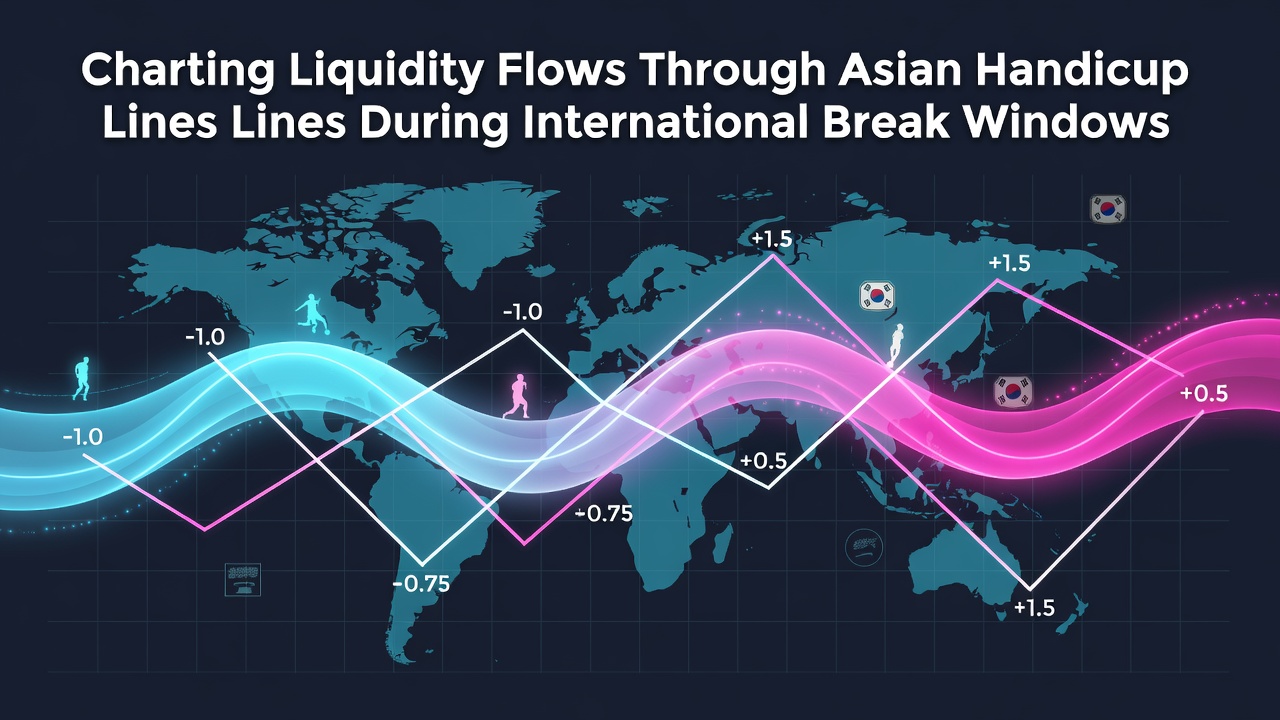
Liquidity Shifts in Asian Handicap Lines Across International Break Windows
Asian handicap markets operate on a continuous flow of capital where lines adjust based on incoming stakes and external factors such as team news or injury reports. International break windows introduce a distinct pattern because club competitions pause while national team fixtures take priority, which redirects liquidity away from domestic leagues toward selected international matches.
Market Structure During Club Hiatus Periods
Bookmakers reduce the number of available club matches during these windows yet maintain deep liquidity in Asian handicap lines for major national team encounters, while observers note thinner books on lower-profile friendlies and qualifiers. Data from past cycles shows volume spikes in handicap lines for teams like Brazil or Germany when they face regional opponents because bettors concentrate wagers on those contests. Liquidity providers respond by widening spreads temporarily then tightening them once early money settles, which creates measurable flow patterns across the duration of the break.
Capital Movement Indicators
Traders track several metrics to chart these flows including line movement velocity, stake distribution across handicap values, and correlation with pre-break club form. When a national side enters a break on the back of strong domestic results, early liquidity often pushes the line toward the favorite, yet sharp action from professional syndicates can reverse that direction within hours. Studies of historical windows reveal that liquidity tends to cluster around quarter-goal and half-goal margins rather than full-goal lines because those increments allow finer risk calibration during uncertain international schedules.
One documented case involved a European qualifier window where liquidity surged into the underdog side after an injury to a key midfielder surfaced late in the day, which forced market makers to shade the line and absorb teh imbalance. Such adjustments highlight how information asymmetry influences capital direction while the absence of club fixtures removes the usual benchmark data that traders rely upon.
Patterns Observed in Recent Windows
Figures from July 2026 windows indicated elevated turnover in Asian handicap markets for CONMEBOL and UEFA fixtures compared with earlier breaks, according to aggregated exchange data. Liquidity concentrated on matches involving sides with recent FIFA rankings shifts because bettors used those rankings as proxies for expected performance. Market depth remained robust on the main lines yet thinned noticeably on alternative handicaps such as +1.25 or -0.75, which reduced the ability of large positions to enter without moving the price.
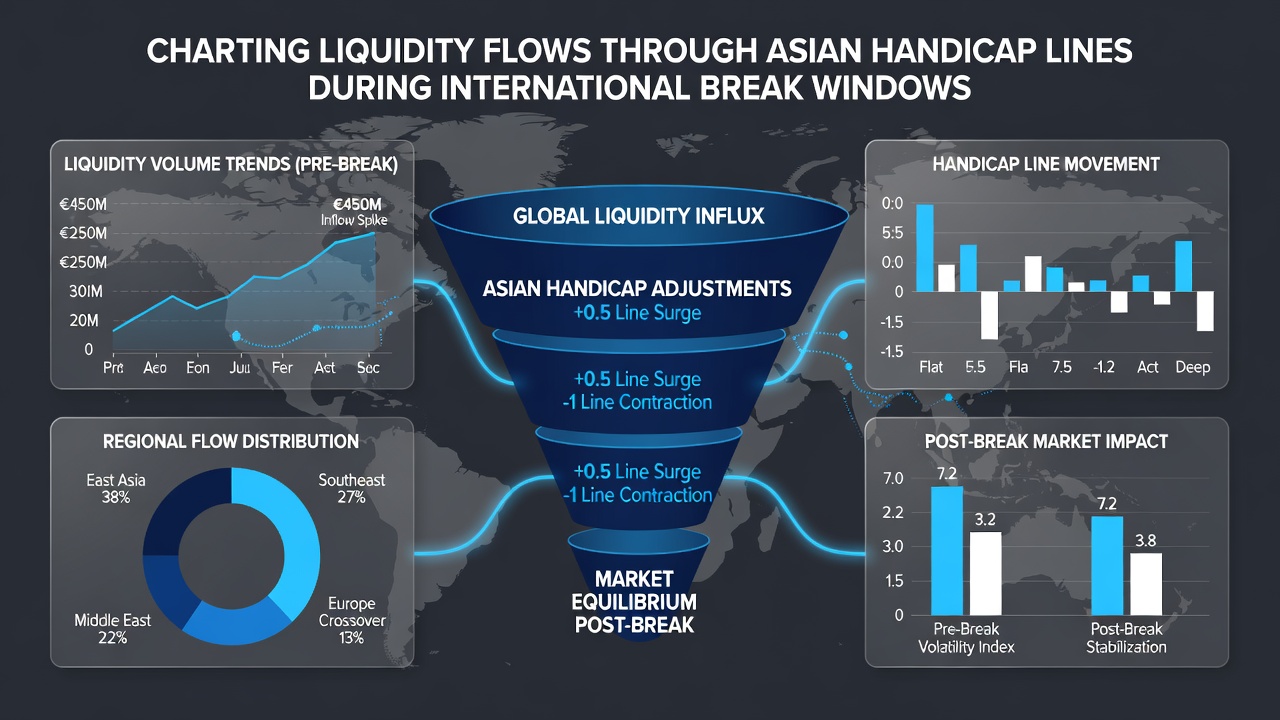
Researchers have examined these dynamics through order book analysis that separates recreational and professional flows. Professional money tends to arrive in the final 24 hours before kickoff when line stability allows more precise entry points, whereas earlier liquidity often reflects recreational positioning based on team reputation. The result is a two-phase movement where initial lines drift then stabilize before sharp correction occurs.
Tools for Tracking Flows
Analysts employ several methods to monitor liquidity including real-time line comparison across multiple exchanges, volume-weighted average price calculations, and correlation matrices that link handicap movements to related markets such as total goals. These approaches allow identification of when capital is flowing toward or away from specific outcomes. Academic papers on sports betting efficiency have applied similar techniques to international fixtures and found that liquidity imbalances during breaks can persist longer than in club competitions because fewer hedging opportunities exist.
Industry reports from the European Gaming and Betting Association note that operators adjust risk parameters during these periods to account for the altered information environment. EGBA publications describe how reduced fixture density leads to concentrated exposure on fewer events. Meanwhile a University of Sydney analysis of betting market efficiency examined Asian handicap data from multiple international windows and identified recurring liquidity clusters around matches featuring high-profile players returning from injury.
Regional Variations in Liquidity Behavior
Asian markets often exhibit different flow characteristics compared with European books during the same window because time zone differences affect when major syndicates place wagers. Southeast Asian exchanges frequently see overnight liquidity surges on European national team matches while Western operators observe steadier but lower-volume action. These geographic distinctions create arbitrage windows that sophisticated participants exploit by moving capital across platforms as lines diverge.
July 2026 data further illustrated that liquidity in South American qualifiers drew disproportionate volume from local bettors, which produced sharper line movements than observed in parallel European fixtures. Market makers compensated by increasing the frequency of line updates to manage exposure, which in turn generated additional signals for flow-tracking algorithms.
Conclusion
Charting liquidity through Asian handicap lines during international breaks requires attention to timing, stake distribution, and regional differences because these windows alter the normal information and fixture landscape. Observers continue to refine tracking methods as new data emerges from each cycle, which improves the ability to map capital movements accurately across successive breaks.