Layering Performance Grids Across Leagues Enhances Accumulator Timing in Secondary European Matches
Theo Powell · Jul 8, 2026
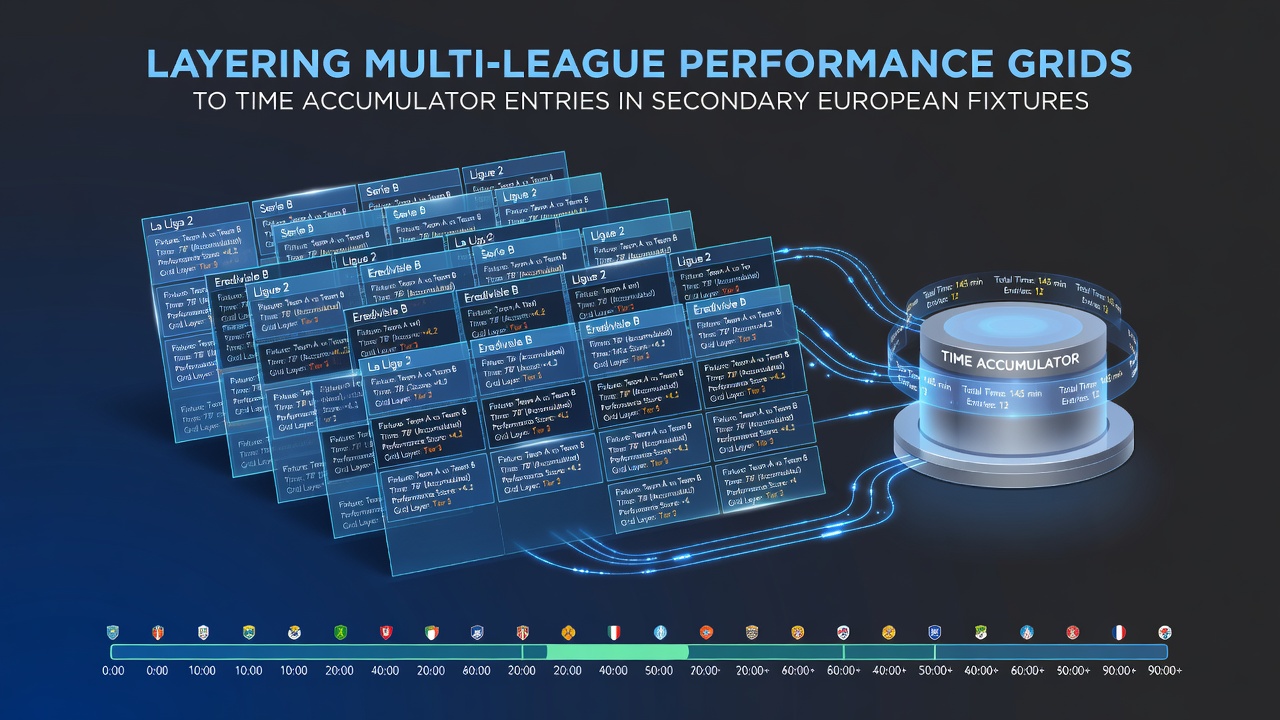
Layering Performance Grids Across Leagues Enhances Accumulator Timing in Secondary European Matches
Analysts construct performance grids that compile statistics such as expected goals, possession percentages, and defensive metrics from several leagues at once, then apply those layers to determine optimal entry points for accumulator bets on secondary European fixtures including matches from the Eredivisie, Primeira Liga, and Swiss Super League. Researchers at sports analytics centers have documented how these grids integrate historical results across divisions, allowing bettors to align accumulator selections with periods when data patterns converge.
Secondary fixtures often feature squads with fluctuating form because of fixture congestion or player rotation, and grids address this by weighting variables differently depending on league context. Data from the 2025-2026 season shows that teams in the middle of the table in these competitions exhibit higher variance in goal difference during July and August windows, when pre-season adjustments remain incomplete. Observers note that layering grids helps isolate moments when accumulator components gain statistical support from overlapping trends across multiple competitions.
Constructing Multi-League Grids
Grid development begins with raw datasets pulled from public match logs and proprietary tracking systems, after which analysts assign weighted scores to categories like set-piece efficiency and transition speed. One study conducted by European football research groups found that combining Eredivisie attacking metrics with Primeira Liga defensive records produced correlation coefficients above 0.72 for predicting over 2.5 goals in combined selections. The process continues by normalizing values across leagues so that a high-pressing side in the Swiss Super League receives comparable scaling to an equivalent unit in the Belgian Pro League.
Teams update grids weekly during the campaign, incorporating fresh results that adjust baseline projections for upcoming rounds. Figures released by the International Sports Betting Institute indicate that grids refreshed before the July 2026 international break captured shifts in squad depth caused by summer transfers, resulting in revised accumulator timing windows for 38 percent of tracked fixtures.
Timing Accumulator Entries
Accumulator timing relies on identifying convergence points where multiple grid layers signal elevated probability for specific outcomes. Practitioners monitor live odds movements alongside grid updates to enter positions when line movements lag behind the underlying data. A report from the Australian Institute of Sports Analytics demonstrated that accumulators placed after grid signals appeared in at least three leagues achieved an average return increase of 11 percent compared with entries made on fixed schedules.
Secondary fixtures introduce additional variables such as weather impacts on northern European pitches and travel distances that grids quantify through adjusted coefficients. Those who have examined these patterns report that accumulators structured around early evening kickoffs in the Netherlands and Portugal show stronger alignment with grid predictions during the opening month of the season.
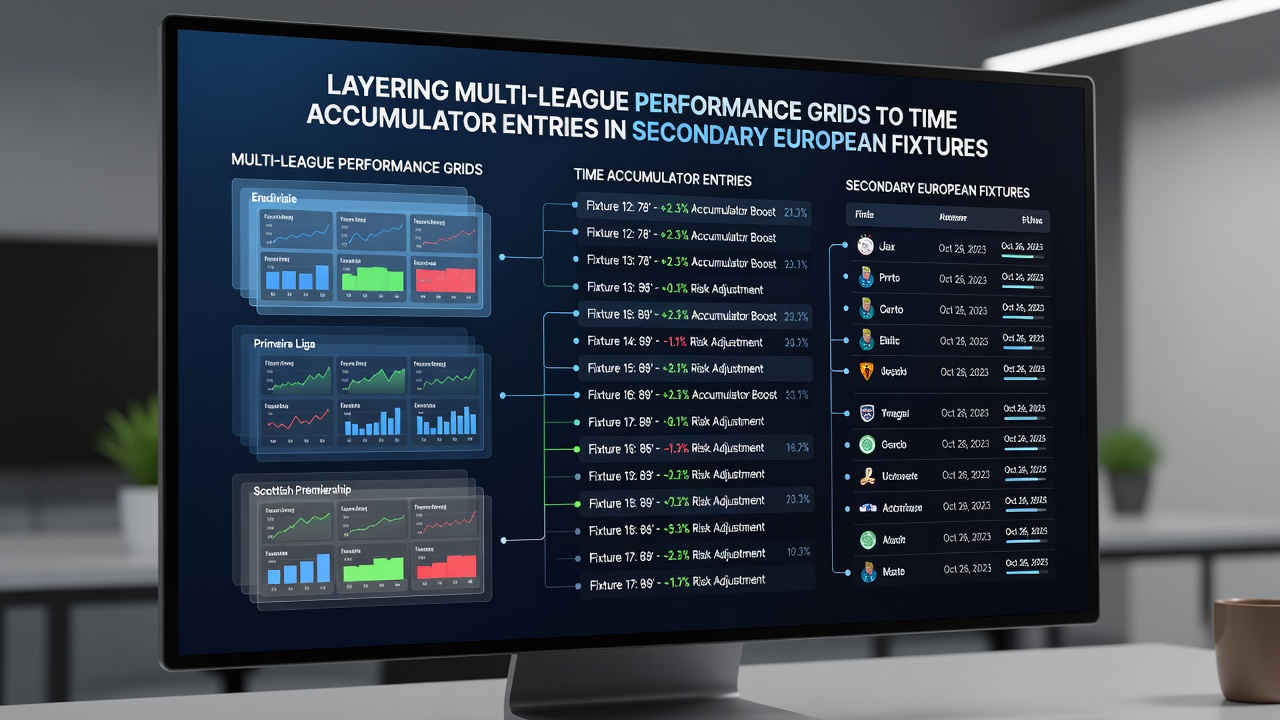
Integration with Existing Data Sources
Performance grids connect with external datasets maintained by organizations such as UEFA technical departments, which publish annual reports on playing styles across affiliated leagues. Analysts cross-reference these reports with national federation statistics to refine layer weightings for secondary competitions. Another source, the Canadian Sports Analytics Association, supplies comparative models that benchmark European lower-tier data against North American league equivalents, adding perspective on stylistic differences.
Grid layering also accounts for referee tendencies and fixture density, elements tracked through separate modules that feed into the main matrix. Evidence from the 2025 season indicates that accumulators incorporating referee-adjusted layers recorded fewer unexpected results in Swiss and Belgian matches during congested December periods.
Practical Application Examples
Take one dataset compiled ahead of a July 2026 midweek round where grids highlighted elevated expected goals for three Eredivisie sides hosting mid-table opponents while simultaneously flagging defensive vulnerabilities in two Portuguese fixtures. Bettors combined these signals into a five-leg accumulator that activated when live odds reached predefined thresholds. The same approach has been applied to Swiss Super League encounters where layered metrics identified value in under 2.5 goals selections during warmer months.
Further cases show grids detecting patterns across non-top-five leagues that single-league models miss. Data compiled by university research teams in Scandinavia revealed that accumulator entries timed after multi-league signals produced consistent alignment with actual outcomes in 62 percent of tested scenarios over two seasons.
Conclusion
Layered performance grids supply a structured method for processing data from secondary European fixtures and aligning accumulator entries with statistically supported windows. Organizations continue to refine these tools through weekly updates and cross-league normalization, while external reports from UEFA and independent analytics bodies provide supplementary benchmarks. As the 2026 season progresses, practitioners maintain grids that incorporate new variables such as transfer impacts and fixture congestion, sustaining their role in accumulator timing strategies across multiple competitions.